Katherine's Story, 1848

Katherine's Story, 1848

Adele Whitby

Historical / Historical Fiction / Mystery

Trouble is brewing at Vandermeer Manor and it is up to Katherine and Elizabeth to reveal the truth before it's too late in the fourth book of a fascinating historical fiction series.Twins Katherine and Elizabeth Chatswood are on their way to visit their distant relatives at Vandermeer Manor in Rhode Island. Wedding bells will soon be ringing for their father's cousin, John Vandermeer, in the most magnificent event on either side of the ocean since the twins' birthday ball a few months ago. John Vandermeer's fianceé is the famous writer, Anna DuMay. The girls are instantly struck by her kindness and independent nature. Anna is a woman at the forefront of the social changes beginning to take place in America and she has many friends who attended the Seneca Falls Women's Rights Convention that summer. But then something very precious inside the manor gets vandalized, and the groom threatens to call the wedding off, believing that Anna might have...
Read online
  • 13
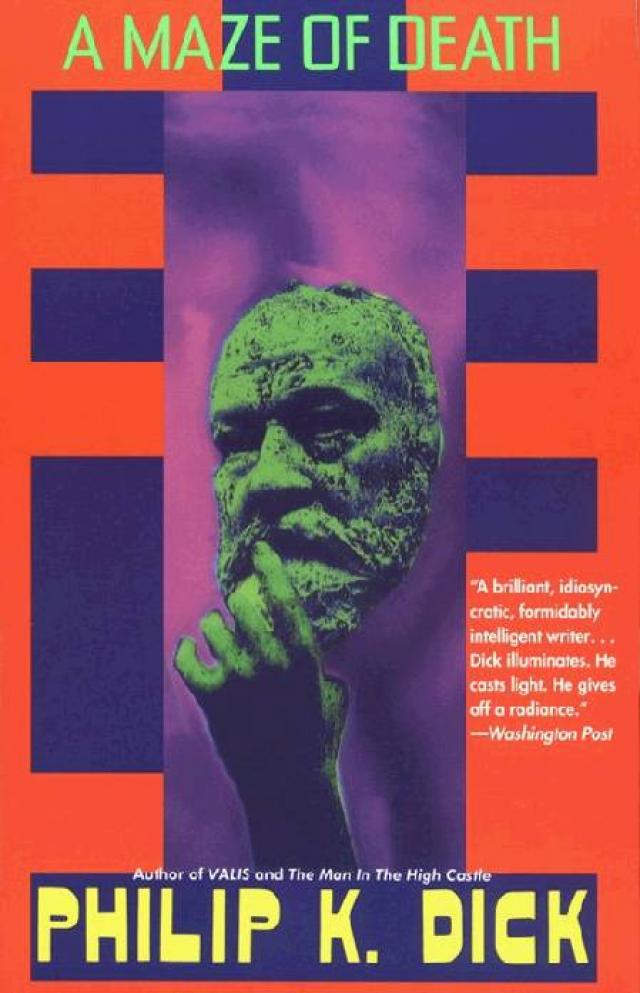
A Maze of Death

A Maze of Death

Philip Kindred Dick

Philip Kindred Dick

Fourteen strangers came to Delmak-O. Thirteen of them were transferred by the usual authorities. One got there by praying. But once they arrived on that planet whose very atmosphere seemed to induce paranoia and psychosis, the newcomers found that even prayer was useless. For on Delmak-O, God is either absent or intent on destroying His creations.
Read online
  • 13
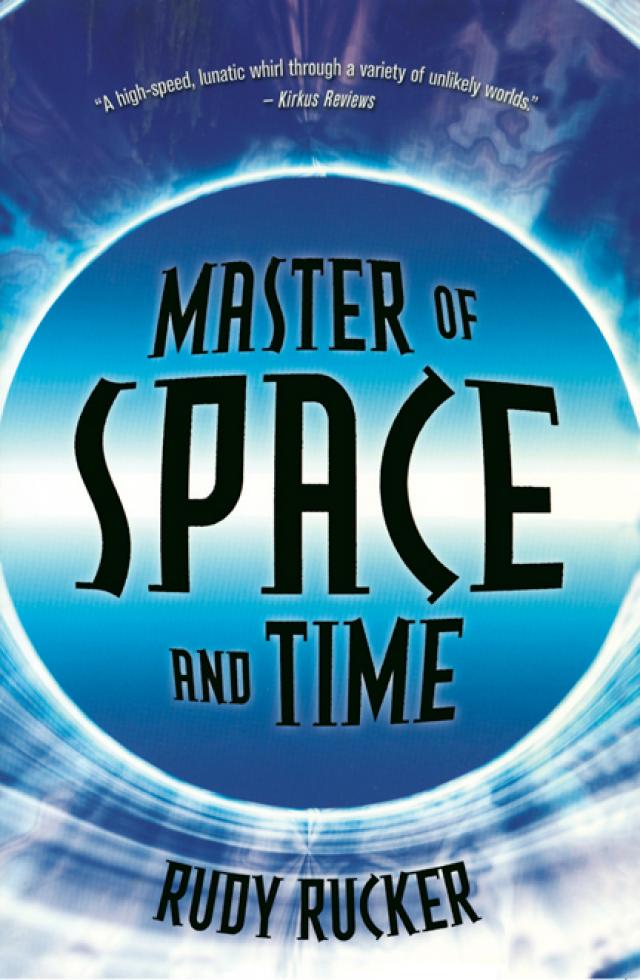
Master of Space and Time

Master of Space and Time

Rudy Rucker

Rudy Rucker

The real world is unbearable to madcap inventor Harry Gerber, so he uses his genius to twist the laws of science and create his own tailor-made universe. Master of Space and Time combines high physics and high jinks, blurring the line between science and magic. From a voyage to a mirror-image world where sluglike parasites make slaves of humanity, to trees and bushes that grow fries and pork chops, to a rain of fish, author Rudy Rucker—two-time winner of the Philip K. Dick Award—takes readers on the ultimate joyride. But once the gluons at the core of Harry's creation run out ... disaster looms for Harry and his friends.
Read online
  • 13
Jaws of the Tiger

Jaws of the Tiger

Andre Baby

Andre Baby

A luxury vacation becomes a terrifying ordeal when pirates take over the Miami- bound cruise ship Caravan Star and demand $60 million in their offshore account within four hours. A Navy SEAL rescue operation executed from the USS Anzio is successful, but leaves many passengers dead and dozens injured including Interpol agent Thiery Dulac and his friend Karen Dawson. Taking advantage of Dulac's firsthand knowledge of the attack after his recuperation, his boss Annette Arlberg assigns him to help the British authorities search for the perpetrators of the meticulously planned hijacking. Dulac is about to unveil an intricate web of dirty money, cover-ups and murders, when Home Secretary Sir Terence Hays invokes British national security interests and pulls Dulac off the case, reinforcing his suspicions that members of the British cabinet may be involved. Now all he has to do is live long enough to prove it.
Read online
  • 13
The Road to Zagora

The Road to Zagora

Richard Collins

Richard Collins

The Road to Zagora is an unusual travelogue spanning India, Nepal, Syria, Turkey, Morocco, Peru, Equador and Wales which springs from Richard Collins' compulsion to travel after he was diagnosed with a progressive incurable disease in 2006. 'Mr Parkinson', as Collins refers to his condition, informs the narrative. Collins and his partner Flic are inveterate walkers and saw no reason to change their travel destinations, post-diagnosis. The places they visit are often mountainous, sparsely populated, subject to extremes of climate and difficult for someone with Collins' condition, and a continuing theme of the book is how he manages the combination of Parkinson's Disease and extreme travel. The reverse of that dramatic tension is an occasional, and very honest, reflection on human frailty by Collins when he fails. Collins' relationship with Flic, brought into sharp focus by these moments, is a further developing strand of narrative, and the travel sequences are interspersed with the...
Read online
  • 13
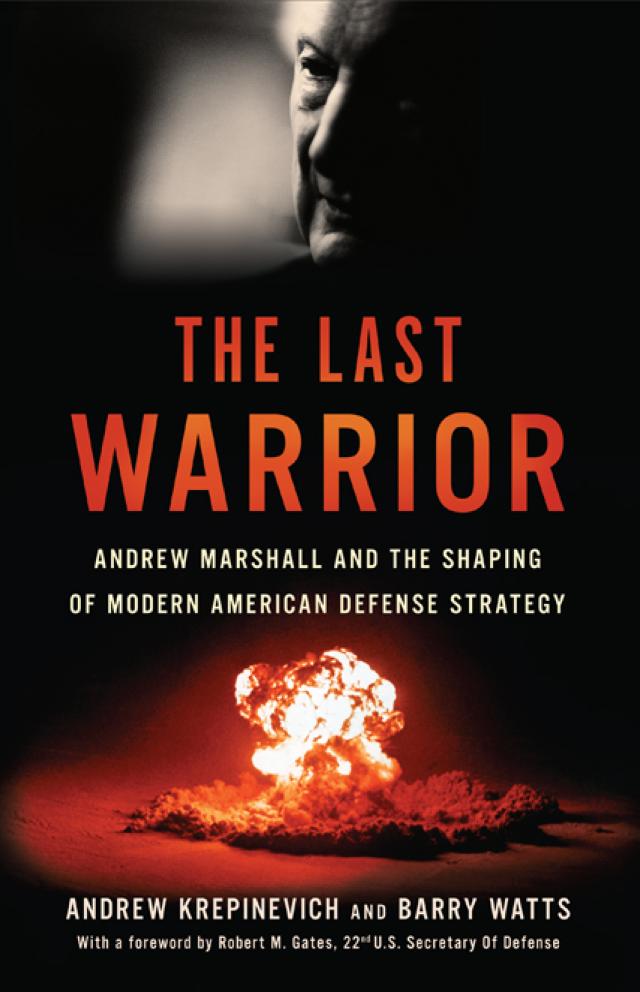
The Last Warrior

The Last Warrior

Andrew F. Krepinevich

War / Military Fiction / Nonfiction

Andrew Marshall is a Pentagon legend. For more than four decades he has served as Director of the Office of Net Assessment, the Pentagon's internal think tank, under twelve defense secretaries and eight administrations. Yet Marshall has been on the cutting edge of strategic thinking even longer than that. At the RAND Corporation during its golden age in the 1950s and early 1960s, Marshall helped formulate bedrock concepts of US nuclear strategy that endure to this day; later, at the Pentagon, he pioneered the development of “net assessment"—a new analytic framework for understanding the long-term military competition between the United States and the Soviet Union. Following the Cold War, Marshall successfully used net assessment to anticipate emerging disruptive shifts in military affairs, including the revolution in precision warfare and the rise of China as a major strategic rival of the United States.In The Last Warrior, Andrew Krepinevich and Barry...
Read online
  • 13
Chris Townsend

Chris Townsend

The Backpacker's Handbook - 3rd Ed

The Backpacker's Handbook - 3rd Ed

Winner of the Outdoor Writers Guild award for excellence, this inspired guide from one of the world's best-traveled adventurers offers essential, up-to-the-minute information and advice on all aspects of backcountry trekking for hikers and backpackers of every stripe. From planning and techniques to gear, it's all covered in succinct, highly readable fashion in an expanded, visually arresting update of a proven bestseller. The Backpacker's Handbook is the only major guide to deliver an in-depth look at all backpacking styles, from ultralight to long-distance hiking. New material on trekking in challenging environments such as deserts and mountains will appeal to hikers who love to push the envelope. Chris Townsend's anecdotal style makes for a book that invites reading from cover to cover, yet is designed to let readers find specific topics quickly. The Backpacker's Handbook teaches us how to make traveling through the wild truly enjoyable and fulfilling while protecting its natural beauty.From the Back Cover" . . . the joy of walking through the ever-changing, ever-constant natural world, the magic of waking to sunlight glinting on a mist-wreathed lake, the excitement of striding through a mountain storm. . . . " These, wrote Chris Townsend in the universally praised first edition of The Backpacker's Handbook, are but some of the reasons to backpack. Here is all you need to do so safely and comfortably. In this thoroughly revised and updated Second Edition, Townsend uses his gently encouraging tone and his own experiences to show what can go wrong. He is slave to neither tradition nor to technology: He recommends pile and Gore-Tex, and has long since abandoned his tarp for a tent, but he still prefers wool socks. And because he believes that "wilderness needs defending from those who love it," Townsend's emphasis throughout is on low-impact camping. The First Edition's success was due to its enormous practicality for backpackers of all skill levels, with everything from essential techniques for every backpacking trip--such as map and compass work--to the skills needed for more remote wilderness journeys--such as how to ford rivers safely and how to choose a route in untracked terrain. To this now add such topics as hiking in deserts, ultralight backpacking, and adventure trekking in distant corners of the globe. The Backpacker's Handbook teaches us how to make traveling through the wild truly enjoyable and fulfilling while protecting its natural beauty. Townsend's advice is always sensible, rarely doctrinaire, never condescending. "Every imaginable topic, from choosing and using equipment, to wilderness nutrition and cooking, to backcountry skills and hazards, is covered thoroughly and engagingly."--Backpacker"The novice as well as the experienced hiker should benefit from this book."--Travel Books Worldwide"Townsend has written a clear and comprehensive primer on backpacking gear. His knowledge in this area is immense."--Sierra"For those thinking of taking a backpack journey, The Backpacker's Handbook is required reading."--Daily Local News (West Chester, Pennsylvania) "The most up-to-date and comprehensive guide to equipment and technique available anywhere. Highly recommended."--Backpack (UK) About the AuthorOne of the world's best-known and most experienced rough-terrain hikers, Chris Townsend has been backpacking for more than 25 years. His most notable adventures include a 1988 trek spanning the 1,600-mile length of the Canadian Rockies, a 1,000-mile walk through the Yukon, and a monumental 3,000-mile expedition from Canada to Mexico along the Continental Divide Trail. Townsend is the author of Wilderness Skiing and Winter Camping and Walking the Yukon, also by Ragged Mountain Press, and of High Summer, Adventure Treks: Western North America, and The Great Backpacking Adventure. When not on the trail, Townsend lives in Scotland.
Read online
  • 13
Einstein's Monsters

Einstein's Monsters

Martin Amis

Fiction / Essays / Contemporary

MARTIN AMIS hates nuclear weapons, and he doesn't care who knows it. In fact, he wants everyone to know it. At mid-career, he has virtually ceased to be a writer of fiction-from 1974 to 1984, he published five comic novels, including the hugely successful Money-and has metamorphosed instead into a kind of anti-nuclear polemicist. Einstein's Monsters, his most recent work, is a collection of stories based on the theme of nuclear holocaust. Lest anyone think this is a chance engagement, Amis has followed up Einstein's Monsters with an article in the October Esquire railing against the insanity of American nuclear planning. The article, a rehash of the Introduction to the present volume, is most notable not for its politics but for the warning it includes to those of us waiting for the return of a depoliticized Martin Amis: "When nuclear weapons become real to you,' he tells us, "hardly an hour passes without some throb or flash, some heavy pulse of imagined super-catastrophe.' The hydrogen bomb has claimed its first English target, and it is the career of Martin Amis. In his new role, Amis runs around like the sheriff in Jaws, as if he's the only person who knows there's a shark in town and everyone else is trying to keep the beaches open. The Esquire article gives a good sense of the fundamental cheesiness of his political thinking. The members of the Washington nuclear establishment, he says, don't mind talking about "X-ray lasers and hard-kill capabilities,' but they "go green' when the author tries to light up a cigarette. When the author interviews an attache from the Soviet embassy, on the other hand, things go differently; the two "drink a lot of coffee and smoke up a storm.' "Sergi and I got along fine,' Amis tells us. "He didn't want to kill me. I didn't want to kill him.' Amis has invented the Marlboro Peace Plan. Einstein's Monsters is only a touch more subtle. It consists of five stories, along with both an "Author's Note' and an Introduction. In his Note, Amis vacillates upon the question of whether the stories are polemical. "If they arouse political feelings,' he tells us, "that is all to to the good,' but really, they "were written with the usual purpose in mind: that is to say, with no purpose at all-except, I suppose, to give pleasure, various kinds of complicated pleasure.' If there is any confusion in the reader's mind, however, it is cleared up by the first story, "Bujak and the Strong Force.' Reading it, one is reminded of the experience of sitting in a college fiction workshop, the excited author right there next to you, enthusiastically explaining the intricacies of his story's symbolic order. Bujak, the title character, is a hugely powerful Eastern European living in a bad neighborhood in London. A survivor of the Nazi occupation of Poland, he spends a great deal of time arguing with the (American) narrator over the value of revenge. The narrator is anti, Bujak is pro. Bujak polices his block, rounds up petty criminals, makes the streets safe for young ladies at night. "He was our deterrent,' the narrator says. At the end of the story, when Bujak returns to his home to find his mother, daughter, and granddaughter brutally rape-murdered, the drunken perpetrators lying asleep on the floor, we expect him to exact some terrible revenge. But he doesn't. "Why?' the narrator asks. "No court on earth would have sent you down.' (Is this how Americans speak, by the way?) "When I had their heads in my hands,' Bujak replies, "I thought how incredibly easy to grind their faces together. But no… I had no wish to add to what I found.' It's… unilateral disarmament! Throughout Einstein's Monsters Amis the author is at war with Amis the nuclear theoretician. "Insight at Flame Lake,' for example, would have been a fine schizophrenic-breakdown story, except that Amis the theoretician felt compelled to tack on an anti-nuclear subtext. "Thinkability,' the long introduction to Einstein's Monsters, has its flashes of brilliant writing (the generations of unborn babies who would be aborted by a nuclear war are described as "queueing up in spectral relays until the end of time'), but it is marred by the same sort of simplistic reasoning that plagues the Esquire piece. Amis wants to pin all our problems on the existence of nuclear weapons. In the face of these missiles, no merely personal atrocity matters: "What vulgar outrage or moronic barbarity can compare with the black dream of nuclear exchange?' It's like asking a meter maid, "How dare you give me a ticket when there are Russian tanks illegally parked on the streets of Kabul?' But Amis the satirist knows that it takes a lot more than nuclear weaponry to explain the spiritual malaise of our century, just as Amis the writer knows (or ought to know) that there is always more than one explanation for any human phenomenon. One suspects, in fact, that Amis's opposition to the Strategic Defense Initiative is derived not from the fear of a perilous escalation in the arms race, but from a (perhaps unconscious) perception that, with nuclear weapons gone, the novelist would have to face the fact of unexcused human weakness again.
Read online
  • 13
183