The Joke

The Joke

Milan Kundera

Literature & Fiction

"A thoughtful, intricate, ambivalent novel with the reach of greatness in it." —John Updike"It is impossible to do justice here to the subtleties, comedy, and wisdom of this very beautiful novel. Milan Kundera is an artist, clearly one of the best to be found anywhere, who says that the good (and evil) that issues from men's souls matters much more than the deeds of a State. And he says it with passion, with good humor, and with love." —Salman RushdieAll too often, this brilliant novel of thwarted love and revenge miscarried has been read for its political implications. Now, more than a quarter century after The Joke was first published and several years after the collapse of the Soviet-imposed Czechoslovak regime, it becomes easier to put such implications into perspective in favor of valuing the book (and all Milan Kundera 's work) as what it truly is: great, stirring literature that sheds new light on the eternal...
Read online
  • 416
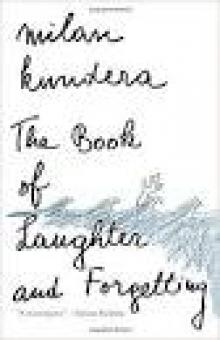
The Book of Laughter and Forgetting

The Book of Laughter and Forgetting

Milan Kundera

Literature & Fiction

Rich in its stories, characters, and imaginative range, The Book of Laughter and Forgetting is the novel that brought Milan Kundera his first big international success in the late 1970s. Like all his work, it is valuable for far more than its historical implications. In seven wonderfully integrated parts, different aspects of human existence are magnified and reduced, reordered and emphasized, newly examined, analyzed, and experienced.
Read online
  • 339
The Festival of Insignificance

The Festival of Insignificance

Milan Kundera

Literature & Fiction

Casting light on the most serious of problems and at the same time saying not one serious sentence; being fascinated by the reality of the contemporary world and at the same time completely avoiding realism-that's The Festival of Insignificance. Readers who know Kundera's earlier books know that the wish to incorporate an element of the "unserious" in a novel is not at all unexpected of him. In Immortality, Goethe and Hemingway stroll through several chapters together talking and laughing. And in Slowness, Vera, the author's wife, says to her husband: "you've often told me you meant to write a book one day that would have not a single serious word in it... I warn you: watch out. Your enemies are lying in wait."Now, far from watching out, Kundera is finally and fully realizing his old aesthetic dream in this novel that we could easily view as a summation of his whole work. A strange sort of summation. Strange sort of epilogue. Strange sort of...
Read online
  • 314
Identity

Identity

Milan Kundera

Literature & Fiction

"Kundera, master of the twosome, finds erotic and existential threads everywhere in daily behavior. Like his previous books, Identity is a cluster of jeweled observations. . . . But Identity has a special charm: suspense. . . . [It] gets us turning the pages in excitement and alarm, and Kundera's wit keeps us turning them to the very end." — San Francisco ChronicleIn a narrative as intense as it is brief, a moment of confusion sets in motion a complex chain of events which forces the reader to cross and recross the divide between fantasy and reality.Sometimes—perhaps only for an instant—we fail to recognize a companion; for a moment their identity ceases to exist, and thus we come to doubt our own. The effect is at its most acute in a couple, where our existence is given meaning by our perception of a lover, and theirs of us.With his astonishing skill at building on and out from the significant moment,...
Read online
  • 209
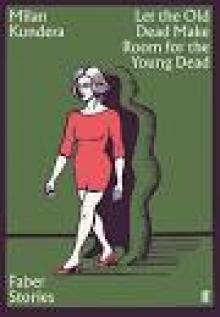
Let the Old Dead Make Room for the Young Dead

Let the Old Dead Make Room for the Young Dead

Milan Kundera

Literature & Fiction

Faber Stories, a landmark series of individual volumes, presents masters of the short story form at work in a range of genres and styles. A chance encounter leads a man to spend the afternoon with an older woman, now a widow, who escaped him fifteen years earlier. Neither of them doubts that the day will end in disgust, but for one intimate moment each finds a way to overcome mortality.Written in 1969, before Milan Kundera was known to English-speaking readers, this story renders male and female characters painful equals, and prompted Philip Roth to admire its 'detached Chekhovian tenderness'.
Read online
  • 197
Jacques and his Master

Jacques and his Master

Milan Kundera

Literature & Fiction

Jacques and His Master is a deliciously witty and entertaining 'variation' on Diderot's novel Jacques le fataliste, written for Milan Kundera's 'private pleasure' in the aftermath of the Russian invasion of Czechoslovakia. When the 'heavy Russian irrationality' fell on Czechoslovakia he felt drawn to the spirit of the eighteenth century - 'And it seemed to me that nowhere was it to be found more densely concentrated than in that banquet of intelligence, humour and fantasy, Jacques le Fataliste'. This translation by Simon Callow has delighted Kundera's admirers throughout the English-speaking world.
Read online
  • 181
The Curtain

The Curtain

Milan Kundera

Literature & Fiction

In this entertaining and always stimulating collection of seven essays, Kundera deftly sketches out his personal view of the history and value of the novel. Too often, he suggests, a novel is thought about only within the confines of the nation of its origin, when in fact the novel's development has always occurred across borders: Laurence Sterne learned from Rabelais, Henry Fielding from Cervantes, Joyce from Flaubert, García Márquez from Kafka. The real work of a novel is not bound up in the specifics of any one language: what makes a novel matter is its ability to reveal some previously unknown aspect of our existence. In The Curtain, Kundera skillfully describes how the best novels do just that.
Read online
  • 111
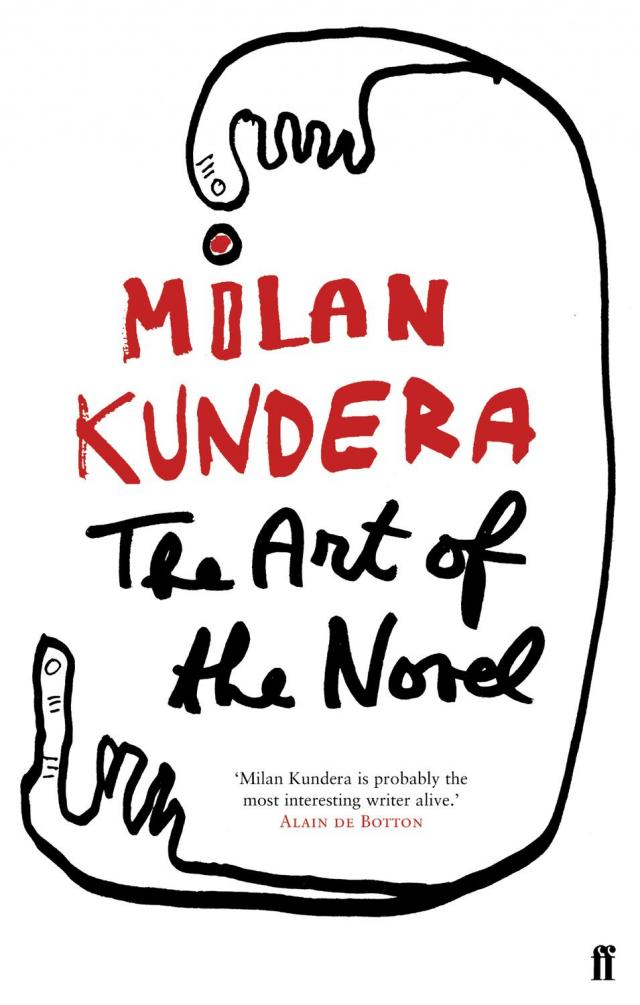
The Art of the Novel

The Art of the Novel

Milan Kundera

Literature & Fiction

The classic of literary criticism from one of the world's greatest novelists.In seven independent, but closely related chapters, Milan Kundera presents his personal conception of the European novel, which he describes as 'an art born of the laughter of God'.'Invigoratingly suggestive . . . Kundera's map of the development of the European novel is outlined with the reckless brevity of the man who knows exactly what and where the salient points are.' London Review of Books'Kundera is the saddest, funniest and most loveable of authors.' The Times
Read online
  • 106
(1994) Slowness

(1994) Slowness

Milan Kundera

Literature & Fiction

Readers are taken through a midsummer's night in which two tales of seduction, separated by more than 200 years, interweave and oscillate between the sublime and the ridiculous. They provide merely a narrative framework for Kundera's novel, within which is condensed existential analysis.
Read online
  • 70
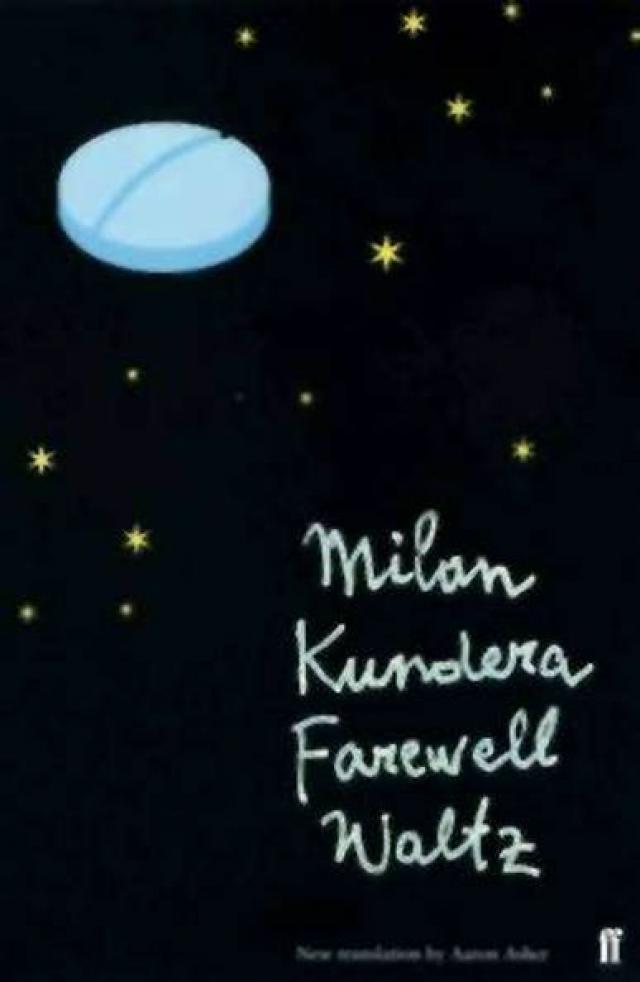
Farewell Waltz

Farewell Waltz

Milan Kundera

Literature & Fiction

"It is hard to imagine anything more chilling and profound than Kundera’s apparent lightheartedness." – Elizabeth Pochoda IN this dark farce of a novel, set in an old-fashioned Central Euroepean spa town, eight characters are swept up in an accelerating dance: a pretty nurse and her repairman boyfriend; an oddball gynecologist; a rich Amrican (at once saint and Don Juan); a popular trumpeter and his beautiful, obsessively jealous wife; an unillusioned former political prisoner about to leave his country and his young woman ward.Perhaps the most brilliantly plotted and sheerly entertaining of Milan Kundera’s novels, Farewell Waltz poses the most serious questions with a blasphemous lightness that makes us see that the modern world has deprived us even of the right to tragedy.Written in Bohemia in 1969-70, this book was first published (in 1976) in France under the title La valse aux adieux (Farewell Waltz), and later in thirty-four other countries. This beautiful new translation, made from the French text prepared by the novelist himself, fully reflects his own tone and intentions. As such it offers an opportunity for both the discovery and the rediscovery of one of the very best of a great writer’s works."Kundera remains faithful to this subtle, wily, devious talent for a fiction of 'erotic possibilities. ”New York Times Book Review"Farewell Waltz shocks. Black humor. Farcical ferocity. Admirably tender portraits of women." “Le Point (Paris)" After Farewell Waltz there cannot be any doubt. Kundera is a master of contemporary literature. This novel is both an example of virtuosity and a descent into the human soul."
Read online
  • 66
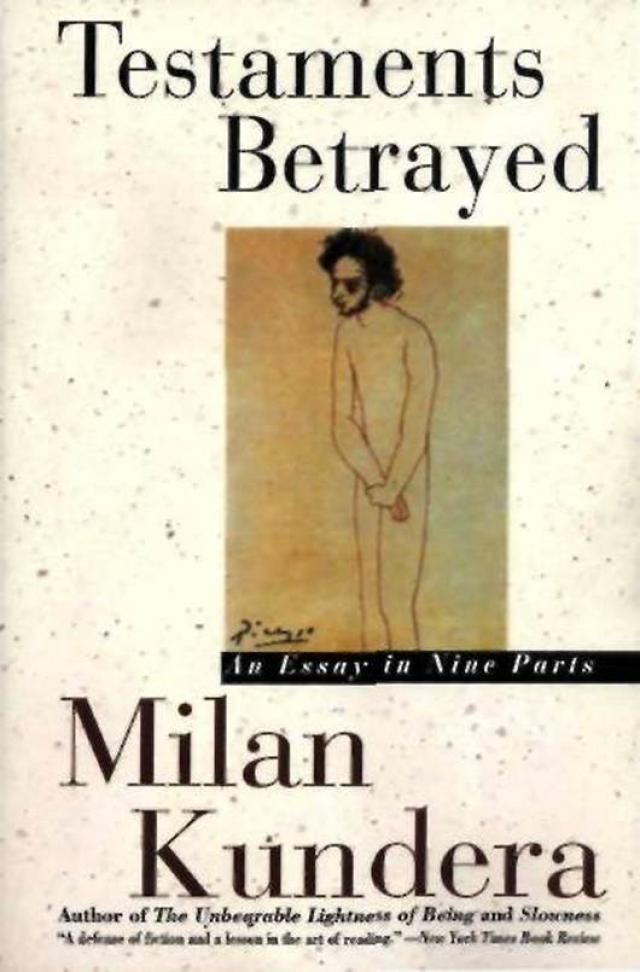
Testaments Betrayed: An Essay in Nine Parts

Testaments Betrayed: An Essay in Nine Parts

Milan Kundera

Literature & Fiction

Milan Kundera has established himself as one of the great novelists of our time with such books as The Unbearable Lightness of Being, Immortality and The Book of Laughter and Forgetting. In Testaments Betrayed, he proves himself a brilliant defender of the moral rights of the artist and the respect due to a work of art and its creator’s wishes. The betrayal of both – often by their most passionate proponents – is the principal theme of this extraordinary work. Readers will be particularly intrigued by Kundera’s impassioned attack on society’s shifting moral judgments and persecutions of art and artists, from Mayakovsky to Rushdie.
Read online
  • 29
183